Manual.ly Logo

Moldex Series 9000 EasyLock Notendahandbok

0,0 · 0 Einkunnir

PDF handbók · 44 síður

íslenska

M: QW-35-FL
sida

/ 44

Loading...
4059dcbd114d49994f910f96f037830bf142 page 5
3
GB – Instructions for Series 9000 Masks
Important Information for Users
This manual is only valid in conjunction with the instruction manual for Moldex Series
7000/9000 gas and particulate filters. Failure to comply with these instructions on
how to use the product and failure to wear the respiratory protection in the polluted
area may negatively impact on the health of the user and lead to permanent damage
and life-threatening injuries.
• This breathing apparatus does not supply oxygen (02) • Only use the product in ad
-
equately ventilated areas,(19.5 Vol.-% oxygen) • The mask and filters must be selected
in accordance with the pollutant type and concentration (see Table 2). • In the case
of gases with insufficient warning properties, filters may only be used if special usage
policies are specified for this purpose. • If the conditions are uncertain or changeable,
self-contained breathing apparatus must be worn. • You must exit the working area
and replace the respirator mask immediately if: – the mask is damaged, – you expe
-
rience difficulty in breathing, – you experience dizziness or fatigue. – you can taste
or smell hazardous substances or if you experience irritation • Read the instruction
manual before using the mask. • The product does not contain any metallic parts that
could cause ignition in potentially explosive atmospheres. • If you have any questions
about how to use the product, please contact Moldex-Metric. • You must also observe
the relevant rules and regulations when using respiratory equipment. • Under certain
circumstances, persons with beards, long sideburns or other anomalies in the area
around the sealing lines may be unable to achieve a proper sealing fit. Spectacle
frames that extend under the sealing line will impede a proper sealing fit. • The masks
must not be modified in any way. • Users of the masks and filters must be familiar with
how to handle them correctly. • When not in use, the mask and filter must be stored in
an uncontaminated environment.
Caution: Do not use filter equipment in unventilated containers and confined spaces.
Preparations Before Using the Full-mask
The full-mask must always be checked before use. Do not use a damaged or defective
mask. Seek the immediate assistance of a supervisor.
You must check • The mask and the filters for fractures, deformations, cracks and
contamination. • Whether the head strap is torn, nicked or damaged in any other way
and whether it provides sufficient elasticity. • The inhalation and exhalation valves
as well as the sealing rings on the filter connections for contamination, deformation,
fractures and cracks. Make sure that the valves and sealing rings are fitted correctly. •
The use-by-date of the filter and their correct fitting in accordance with the instruction
manual for gas and particulate filters. Fitting/removing the full-mask (Figures 1, 2, 3
and 4) Open the straps fully at the 4 adjustment points and hold the head strap with
one hand at the bracing with the Moldex lettering. Place the opening of the head strap
at the back of the neck and pull the mask down over your face from above. At this point,
make sure that no hairs are trapped between the sealing lip and your face. Position
the mask on your face and use one hand to press the mask firmly against your mouth
and chin. Now use your other hand to pull the neck strap tight on one side and then
repeat the procedure on the other side. To ensure the best possible seal between mask
and face, you should always tighten the neck straps first. The head strap must lie flat
on your head. To ensure that the mask fits comfortably, adjust the head and neck strap
equally. Before entering your working area, check that the mask creates a seal around
the face. To remove the mask, first loosen the clips on the neck strap by pulling the mask
away from your face. Using suction to check the face seal (Figure 5) Place the palm
of your hand over the opening on the filter cover to seal it and breathe in slowly. If the
facepiece contracts slightly, the mask is correctly seated. If you notice an inflow of air,
adjust the position of the mask on your face or adjust the tension of the straps. Repeat
this check until a seal is achieved. Using excess pressure to check the face seal (Figure
6) For full-masks equipped with an EN 148-1 connection, check the face seal before
fitting the filter to the facepiece. Place the palm of your hand over the exhalation valve
and breathe out slowly. If no air escapes between the facepiece and your face, a prop
-
er sealing fit is achieved. If you notice air escaping, adjust the position of the mask on
your face or adjust the tension of the straps. Repeat this check until a seal is achieved.
Under no circumstances should you enter a hazardous area if you are unable to
achieve a proper sealing fit. Seek the assistance of a supervisor.
Maintaining the Full-mask
The maintenance intervals as set out in the national regulations must be adhered to.
The date of manufacture is shown on the inside of the face seal in the chin area.
Cleaning/Disinfection We recommend cleaning the mask after each use. If not in use,
clean the mask after 6 months at the latest. Remove the filter; clean the facepiece
with warm water (max. 50°C). If necessary, use a neutral cleaning agent and an
alcohol-based disinfectant. To clean the valve membrane, remove it from the holder.
To clean the inner mask, unfasten it from the two stop points. To refit it, use the guide
rails on the lower part of the lens and the two stop points. To dismantle the filter, refer
to the instruction manual for gas and particulate filters. After having cleaned or disin
-
fected the mask, the face seal needs to be checked by means of suitable leak testing
equipment. Before cleaning pull the protective film away from the lens Dry the mask
thoroughly before putting on a new protective film and before storing it. Storage Keep
the 9000 mask sealed in a dry, uncontaminated environment. Protect against sunlight
and sources of heat (see the "Storage" icons). The name of the wearer and a record
of the filter changes can be noted on the packaging. Caution: At low temperatures,
moisture can cause the valves to freeze up. The date of manufacture is engraved on
the inside of the mask. Calendar clocks see page 39. Exhalation Valve (Spare Part
No. 9974 [b]) Fold down the cover of the exhalation valve and check the exhalation
valve and valve seat for contamination, deformation, fractures or cracks. Replace the
valve membrane when necessary, or every 4 years at the latest. Please note date of
replacement. Inhalation Valve (Spare Part No. 9974 [a]) Check the inhalation valve
on the inner mask and on the inside of the filter connection for contamination, defor
-

Spjallaðu við Moldex Series 9000 EasyLock-handbókina þína með gervigreind

Fáðu tafarlaus svör frá gervigreind úr Moldex Series 9000 EasyLock-handbókinni þinni

Spyrðu hvað sem er um Moldex Series 9000 EasyLock. Svörin koma úr þessari handbók, ásamt síðunum sem þau eru byggð á.

Series 9000 EasyLock Vidhaldsaaetlun

Minntu mig a thegar vidhald er komid a dagskra
Á 6 mánuði
Hreinsu ónotaða maska

Ef maskinn er ekki í notkun, hreinsaðu hann að minnsta kosti á 6 mánaða fresti til að tryggja hreinlæti og virkni.

Syna i handbaekinni (síða 5)
Á 4 ár
Skipta um himnu úthálsventils

Skiptu um himnu úthálsventils þegar þörf krefur, eða síðast en ekki seinna en á 4 ára fresti. Skráðu skiptidagsetninguna.

Syna i handbaekinni (síða 5)
Eftir hverja notkun
Hreinsu og sótta maskann

Fjarlægðu síur og hreinsaðu andlitshlutann með volgu vatni (hámark 50°C). Notaðu hlutlausan hreinsi/alkóhól sóttaefni ef þörf krefur. Athugaðu þéttinguna eftir hreinsun.

Syna i handbaekinni (síða 5)
Áður en maskinn er notaður
Athugaðu maska og ventila

Athugaðu maska, síur, höfuðól, inn- og úthálsventila og þéttringi fyrir skemmdum, mengun eða afmyndun áður en maskinn er settur á.

Syna i handbaekinni (síða 5)

Okeypis vidhaldsminningar

Miðað við kaupdag þinn. Alltaf ókeypis, afskráðu þig hvenær sem er.

Með því að senda inn samþykkir þú persónuverndarstefnuna. Þú getur afskráð þig með einum smelli í hvaða tölvupósti sem er.
M: qwen/qwen3.8-flash

Spurðu Spurningu

0/1000

Mælir þú með Series 9000 EasyLock?

Já Nei

Algengar spurningar

A

Non, cet appareil respiratoire ne fournit pas d'oxygène. Il est strictement destiné à une utilisation dans des zones bien ventilées contenant au moins 19,5% de volume d'oxygène.

Er þetta svar gagnlegt?

A

Il est recommandé de nettoyer le masque après chaque utilisation. S'il n'est pas utilisé, il doit être nettoyé au moins tous les six mois pour empêcher l'accumulation de contamination.

Er þetta svar gagnlegt?

A

Les montures de lunettes qui s'étendent sous la ligne de joint empêcheront un ajustement de joint correct. Vous pouvez utiliser le support de lunettes en option, mais assurez-vous que la monture ne brise pas le joint.

Er þetta svar gagnlegt?

A

Vous devez quitter la zone de travail immédiatement et remplacer le masque respiratoire. Sentir ou goûter des substances dangereuses indique une brèche dans le joint ou une saturation du filtre.

Er þetta svar gagnlegt?

A

Oui, le produit ne contient aucune pièce métallique qui pourrait causer une ignition dans des atmosphères potentiellement explosives, ce qui le rend sûr pour de tels environnements.

Er þetta svar gagnlegt?

A

Effectuez un test de joint en plaçant votre main sur l'ouverture du filtre et en inspirant lentement. Si le masque se contracte légèrement, le joint est correct. Alternativement, couvrez la valve expiratoire et expirez doucement pour vérifier les fuites.

Er þetta svar gagnlegt?

M: QW-35-FL

Kostir og Gallar

Kostir

  • Conforme à la norme EN 136:1998 CL2 pour une protection respiratoire de haut niveau
  • Le système de sangles de tête EasyLock permet un ajustement rapide et précis
  • Compatible avec une large gamme de filtres à particules P1, P2, P3 et de filtres à gaz de classe
  • L'absence de pièces métalliques réduit les risques d'ignition dans des atmosphères potentiellement explosives
  • Verre polycarbonate à vision claire avec intégration possible du support de lunettes
VS

Ókostir

  • Nécessite une adhésion stricte aux calendriers d'entretien pour assurer la longévité
  • Les barbes ou les poils faciaux peuvent empêcher d'obtenir un ajustement de joint correct
  • Les branches de lunettes s'étendant sous la ligne de joint peuvent compromettre le joint
  • Les valves peuvent geler si exposées à de basses températures avec de l'humidité présente
  • La sélection du filtre doit correspondre précisément aux types de polluants et aux concentrations
M: QW-35-FL

Vara Vörulýsing

Egenskaper

Ventil, ansiktsskjerm, firepunktssele, justerbar, utskiftbart filter

M: QW-35-FL

Vara Lýsing

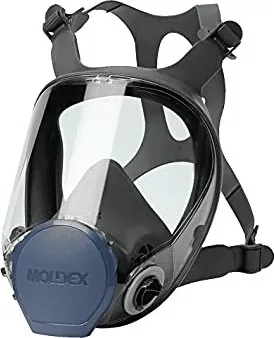
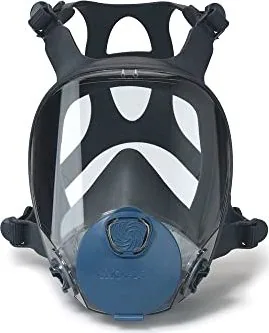
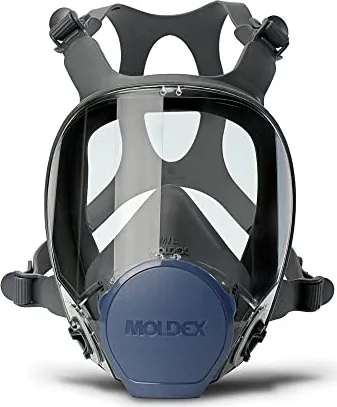
Protégez vos poumons avec le respirateur Moldex Série 9000 EasyLock

Le respirateur Moldex Série 9000 EasyLock masque complet facial se dresse comme un sommet de l'équipement de protection individuelle conçu pour des environnements industriels exigeants. Ce masque facial robuste offre une protection complète contre une large gamme de substances dangereuses, y compris les gaz toxiques, les vapeurs et les matières particulaires. Conçu pour répondre à la norme stricte EN 136:1998 CL2, il assure que les utilisateurs sont protégés contre les contaminants mortels tout en maintenant le confort pendant un port prolongé.

L'une des caractéristiques remarquables de ce respirateur est son système EasyLock innovant, qui simplifie le processus d'enfilage et de retrait du masque. Les sangles de tête comportent quatre points de réglage, permettant un ajustement personnalisé qui s'adapte à différentes formes de visage. Un ajustement correct est critique; le masque doit créer un joint étanche autour de la bouche et du menton sans coincer les cheveux ou interférer avec les montures de lunettes. Il est conseillé aux utilisateurs d'effectuer des vérifications de pression négative et positive avant d'entrer dans toute zone contaminée pour vérifier l'intégrité du joint.

L'entretien et l'hygiène sont primordiaux lors de l'utilisation de la protection respiratoire. Le manuel recommande de nettoyer la pièce faciale après chaque utilisation avec de l'eau chaude ne dépassant pas 50 degrés Celsius. Pour une désinfection plus profonde, des agents de nettoyage neutres et des désinfectants à base d'alcool peuvent être utilisés. Il est crucial de retirer le filtre, de nettoyer les composants internes du masque et d'inspecter les valves pour détecter des débris ou des dommages avant le stockage. Le masque doit toujours être conservé dans un environnement sec et non contaminé, à l'abri de la lumière directe du soleil et des sources de chaleur pour éviter la dégradation des matériaux.

La polyvalence est un autre aspect clé de la Série 9000. Elle prend en charge divers filtres allant des filtres à particules P1 offrant 4 fois la limite d'exposition professionnelle (WEL) aux filtres à gaz de classe 2 fournissant jusqu'à 20 fois la WEL ou 5000 ppm. Des modèles spécifiques comme les 9004, 9005 et 9006 utilisent la connexion EN 148-1 pour une fixation standardisée des filtres. Que vous travailliez dans la transformation chimique, l'agriculture ou la réponse aux urgences, ce respirateur fournit la fiabilité nécessaire pour protéger votre santé.

Notes importantes sur l'entretien

Remplacez toujours la membrane de la valve expiratoire au moins tous les quatre ans. Assurez-vous que la cupule nasale et les sangles de tête sont inspectées régulièrement pour détecter l'usure. Si le masque présente des signes de fissures, de déformation ou de contamination, jetez-le immédiatement. Ne modifiez jamais la structure du masque car cela annule les garanties et compromet la sécurité.

M: QW-35-FL

© Copyright 2026 Manual.ly
